Wow! Madrid, you really were a surprise! A beautiful city on a grand and epic scale that can easily challenge the heavyweights of tourist cities in Europe such as Paris, London, and Rome. Before I headed off to Segovia, I joined a food tour of Madrid and it’s an amazing afternoon!
- El Riojano
- Bartolomé Gourmet
- Plaza Major
- Bar La Capana
- Mirador del Arco de Chuchilleros
- Taberna Basarri Ópera
Full disclosure, this post contains affiliate links which helps me to produce this blog, keep travelling, and bring you these posts! If you book something through clicking a link I may get a little bonus at no extra cost to you. Thank you, Matty.
El Riojano
Our first stop is at El Riojano, a bakery and cake shop operating since 1855. It was opened by Dámaso Maza, the personal pastry chef of Queen María Cristina de Borbón (b.1806 d.1878 r. 1829-1840). The interior has hardly changed in that time, picture carved dark woods and stained glass windows. The only things that have changed is the addition of the tea room and the introduction of the Ponche Segoviano – Segovia sponge cake.

The Ponche Segoviano is a tea cake. Egg yolk, sugar and marzipan are the key ingredients in this cake which makes it very rich.

Layers of sponge cake between egg yolk cream layers covered with a layer of marzipan. It’s lovely but it is sweet, oh so sweet! Perhaps a little too sweet for me at this time of day.
Bartolomé Gourmet
The most pure Iberico Jamón is found at Bartolomé Gourmet which specialises in both grain and acorn fed pigs.

Bartolomé Gourmet is over 100 years old, and when an establishment reaches this milestone, the city lay a plaque at the entrance.
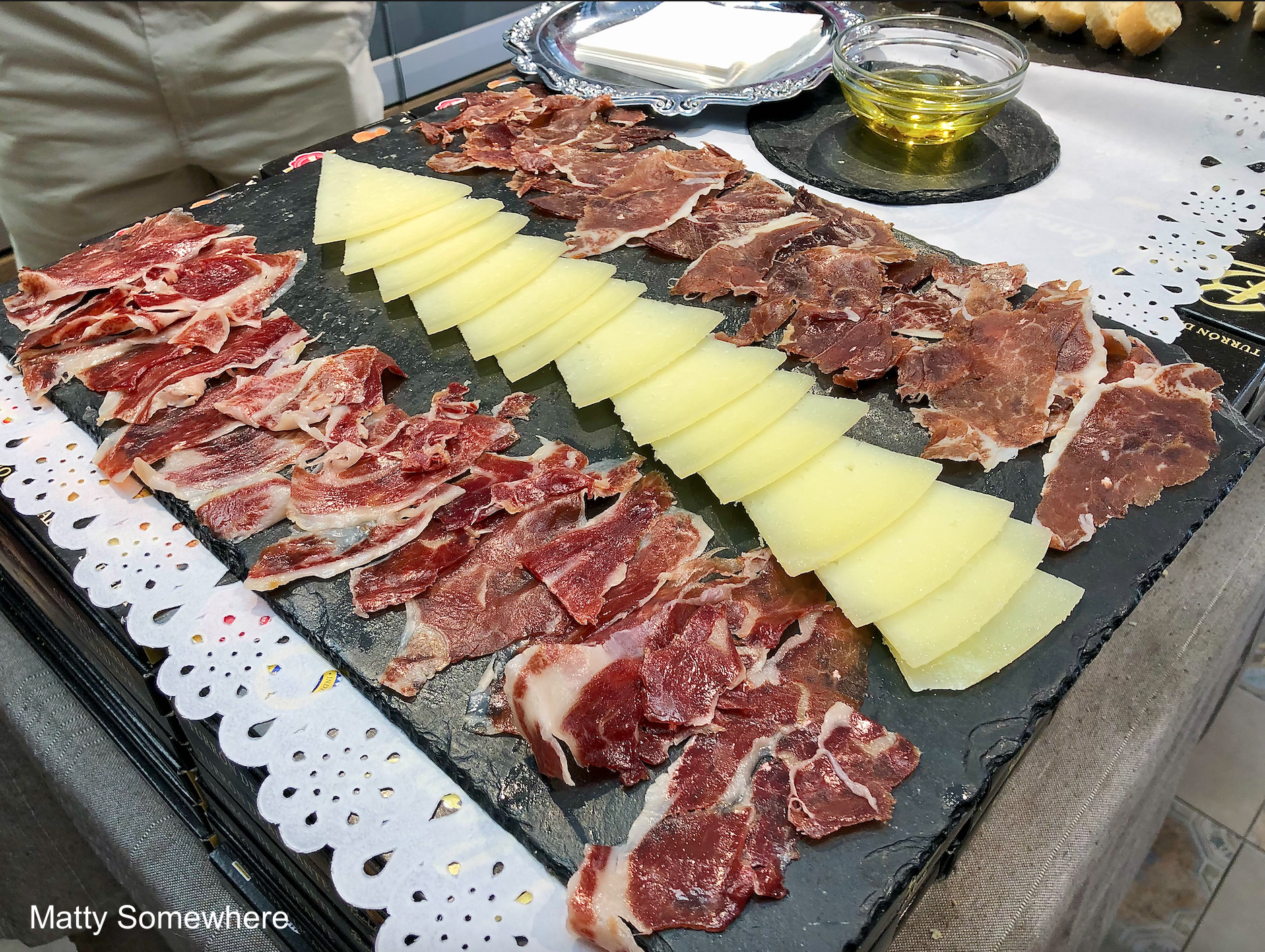
We enjoy these two types of Jamón Ibérico – Iberian ham – from ‘pata negra’ or ‘black hoof’ pigs. These types of ham are not for cooking, only curing. You may note that the jamón in the foreground has a deeper red colour and looks slightly oilier compared to that in the background… this particular jamón comes from acorn fed pigs, while the darker comes from grain fed. The pigs fed acorns then have an oilier content and deeper flavour due to the acorns having a high omega 3 oil content. It’s also the more expensive (and would have to be the one I prefer!). The manchego cheese is made from cows milk and is quite the accompaniment to the salty jamón.

The legs of Iberian ham cost between €100 to €300 dependant on the purity of the pig and whether they have been fed acorns. However, they will last for up to 6 months and the bone is often then used as a broth.
Plaza Major
The main plaza of Madrid is Plaza Major. It is surprisingly small, but also grand at the same time. We are told not many locals actually live in the apartments surrounding the square and they are mostly owned by government. Except for one particular building which is owned by Ronaldo, the famous football star.

Bar La Capana
Alongside Plaza Major where you will find a boccadillo de calamares (Calamari roll). It is quite popular in Madrid but only since the 1950s, so you wont find any of those commemorative plaques here. History has it that people were looking for something different than selling jamón and bread. Calamari is plentiful on the northern coast of Spain and at the time relatively inexpensive to import the fresh squid.

The calamari is dipped in four and flash fried in olive oil and served in a bread rolls for easy consumption. It became a hit back then and now is one of the most popular dishes in Madrid. Sadly, I find them a little too soggy and there is a very strong fishiness in the flavour, I cant even make it through half of one. Tomato sauce is passed around, yet this obnoxious condiment does not entice me to delve further into this roll.
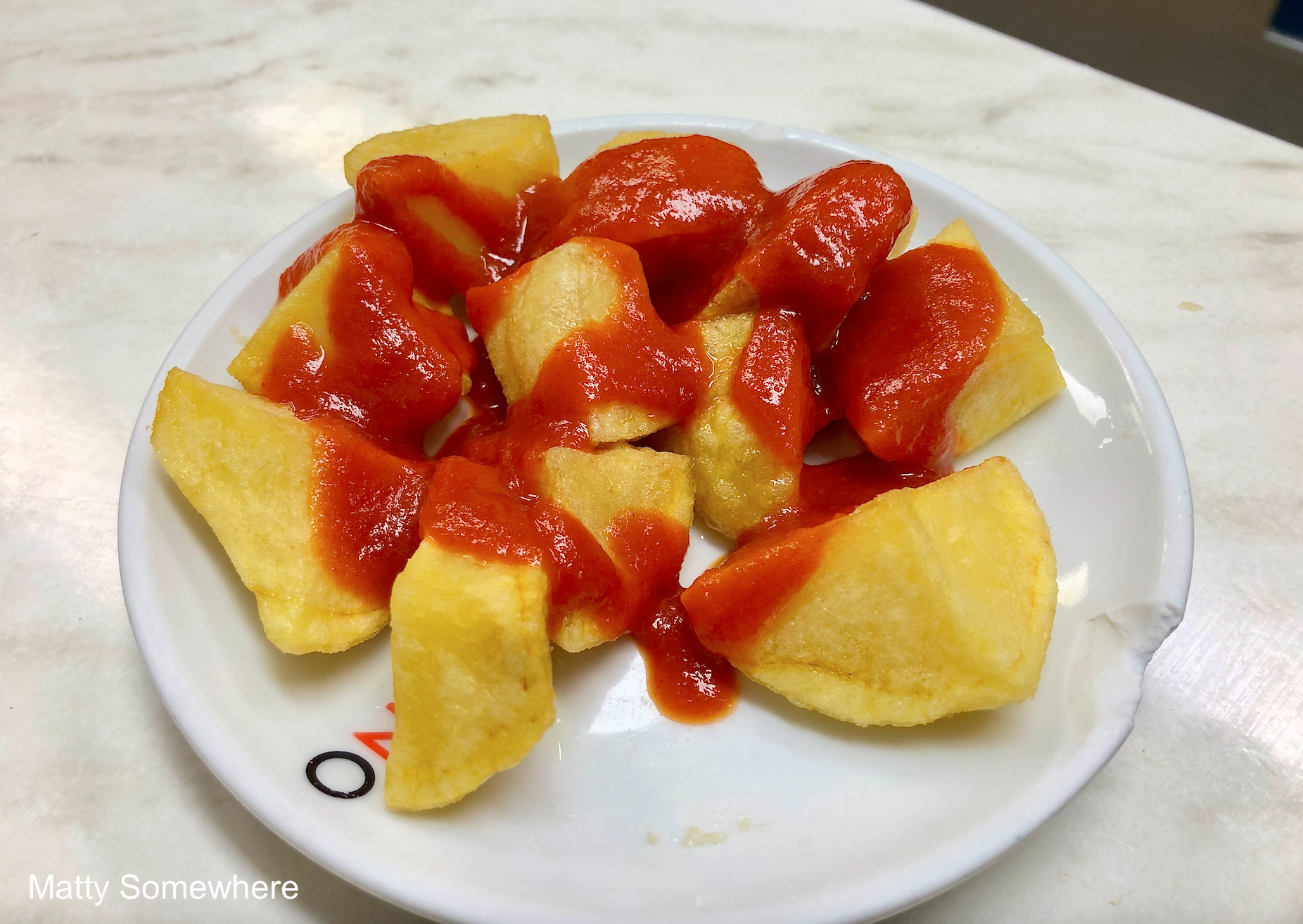
Patatas bravas are also served alongside the roll. So quintessentially Spain. The tapas of tapas. The potatoes are great, crispy yet fluffy, but its the sauce thats the hit here – like a big punch in the mouth hit – as hot as sriracha, but totally paprika flavoured. For someone who can handle maybe a two on the scoville scale, I find these not only hot and spicy but myself coming back for more…punches.
Mirador del Arco de Chuchilleros
Mirador del Arco de Chuchilleros is a 100 year old restaurant that was designed by a student of the famed architect Gaudi.
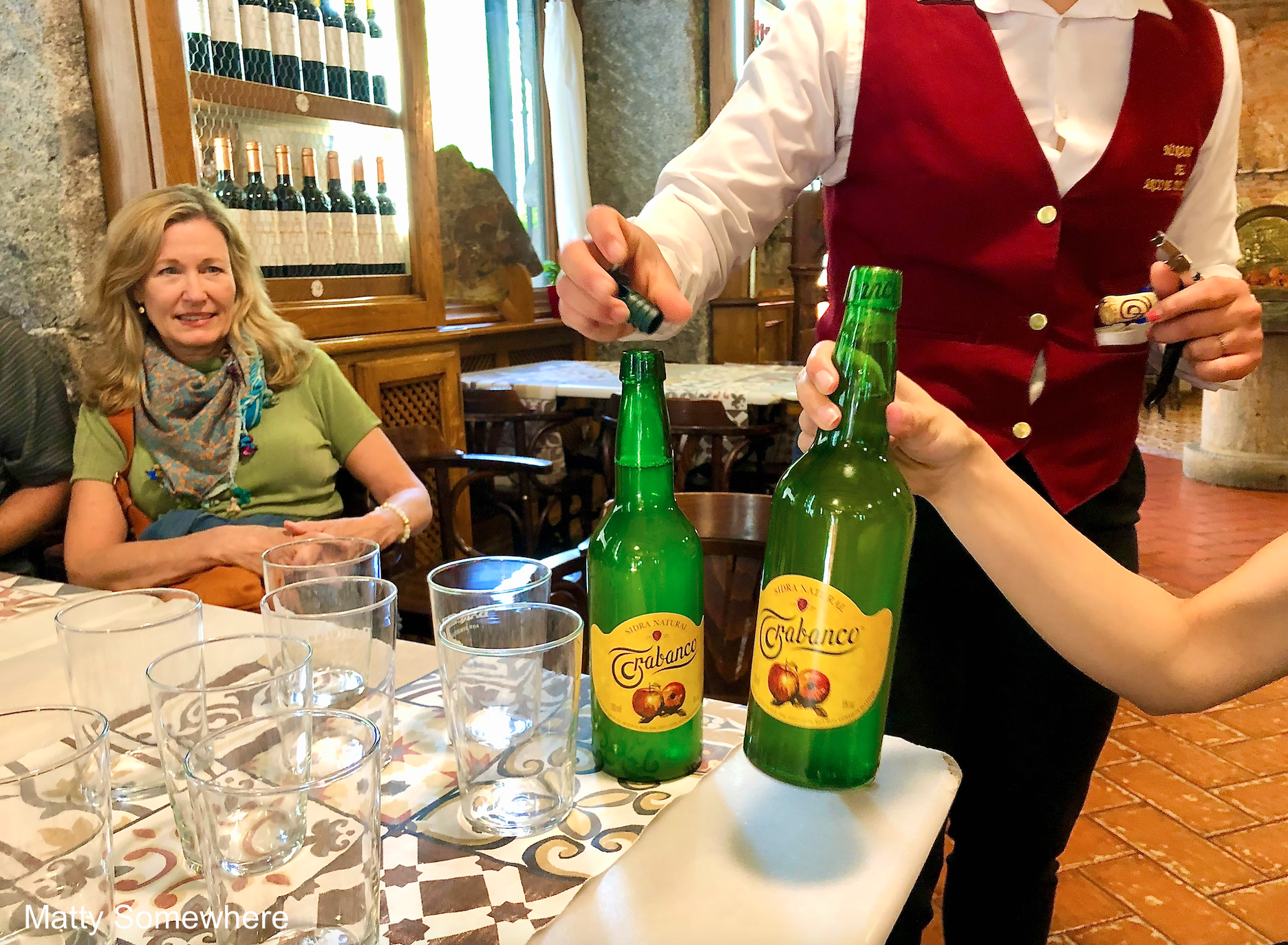
We’re here to try authentic Spanish apple cider. This cider, produced in Asturias in northern Spain, is not exported and does not taste like the cider we are all familiar with. It’s not at all sweet, but rather sour, almost like vinegar, probably due to its short fermentation time of 2 months. There are some rules with drinking cider, first, it must be bought in a bottle, you can never buy just a=a glass. Second, it is poured using a pourer from great height, as far as you feel comfortable without it ending up all over yourself, this is to aerate the drink, and only small amounts are poured and shared amongst friends.

We are served some more manchego cheese, a sheep variety which makes is slightly oilier than the cow manchego. Manchego is one of those European appellations where it must come from the region.
Taberna Basarri Ópera
Our last stop is right in front of Opera House of Madrid and it turns out to be the highlight of the tour.
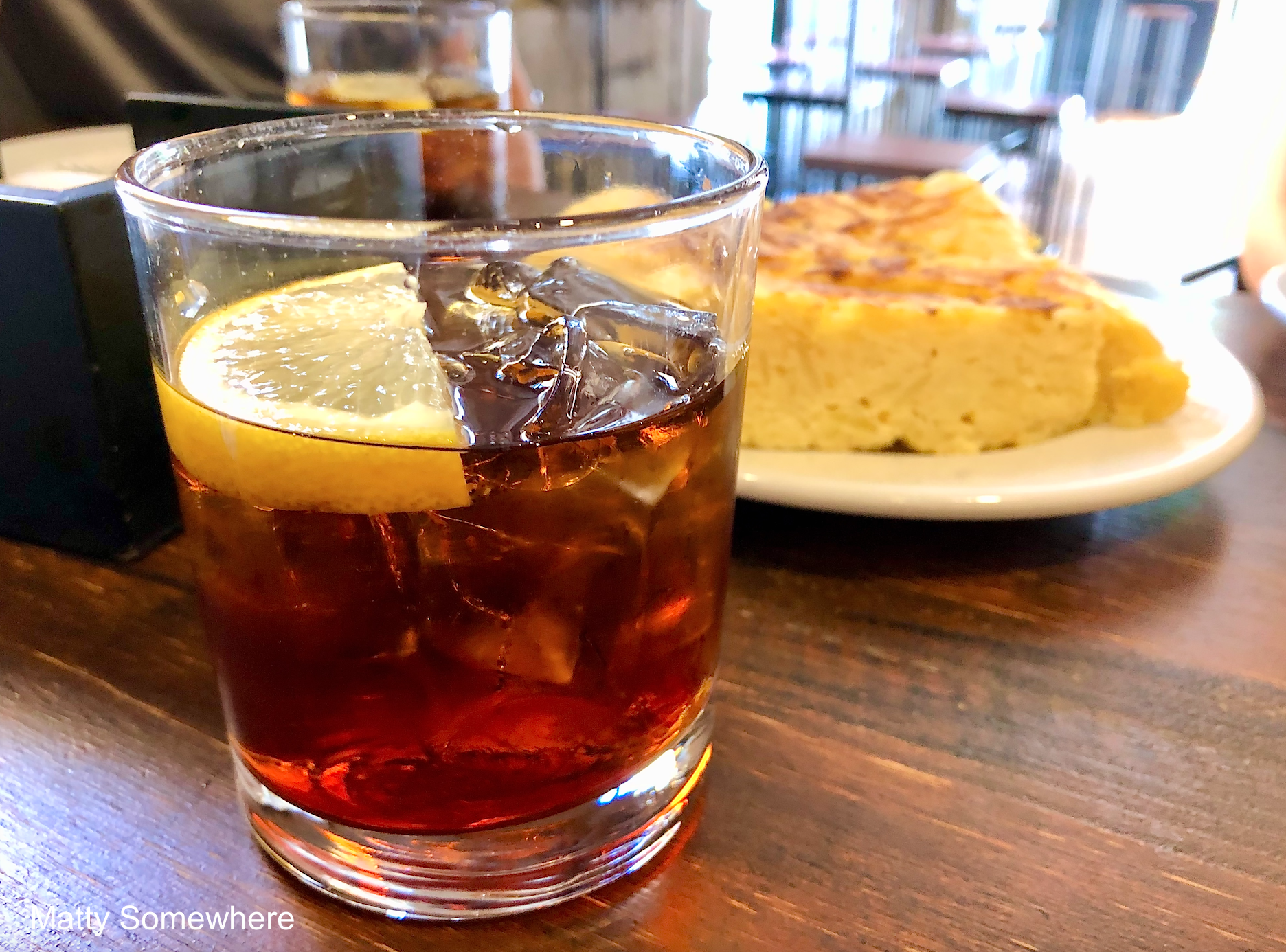
There is a choice of soft drink, white or red wine or Spanish vermouth, which is what I go for. They say in Spain vermouth is not a drink, its an activity….It’s quite sweeter than an Italian version and has quite strong flavours of herbs and spices – I can taste cinnamon and cardamon. It’s really quite a refreshing drink – it may have become my new go to if I lived in Spain!

We start with tortilla de patatas – Spanish potato and egg tortilla or omelette. Apparently there is quite a national argument whether it should come with onions or not. This one doesn’t. While perhaps considered a cousin of the Italian frittata, the tortillas are only fried and not baked. It’s super soft and flavoursome, and a very good version (I’ve been eating these a lot, they’re as common as jamón, found in most cafes and take aways in Spain).

The secret dish turned out to be this lovely salad. Tomato, red and green capsicum (peppers), potato, onion and snow peas, tasted amazing with the zingy mustard and vinegarish dressing. I am a huge fan of it!

These croquetas de jamón (or jamón croquettes in English) went extremely quick. Everyone enjoyed them. I’ve always been a huge fan of these traditionally French morsels but with the flavour of Spain from the use of the jamón. I wish there were more than one each!
You have to go to Madrid. The city and the food is amazing!
Looking to visit Madrid? Book tours here!

 Matty Somewhere
I really enjoyed reading this post while eating afternoon tea! So much delicious food here 😀 I really fell for vermouth while in Spain.